Why Your Dog Pulls Hardest in the First Ten Minutes
Quick Answer: Most dogs pull hardest at the start because arousal peaks before and during the first minutes of a walk - anticipation builds during the lead routine, novel smells are most intense on unfamiliar-since-yesterday ground, and no physical energy has been spent yet. It settles as arousal drops. You can shorten that window by lowering the pre-walk excitement, starting with two minutes of sniffing rather than distance, and doing a short decompression pause before you set off, rather than trying to train loose-lead walking during the exact minutes your dog is least able to learn.
The first block is a tug of war. By the second block you have a completely different dog on the end of the lead.
That pattern tells you what is actually driving it.
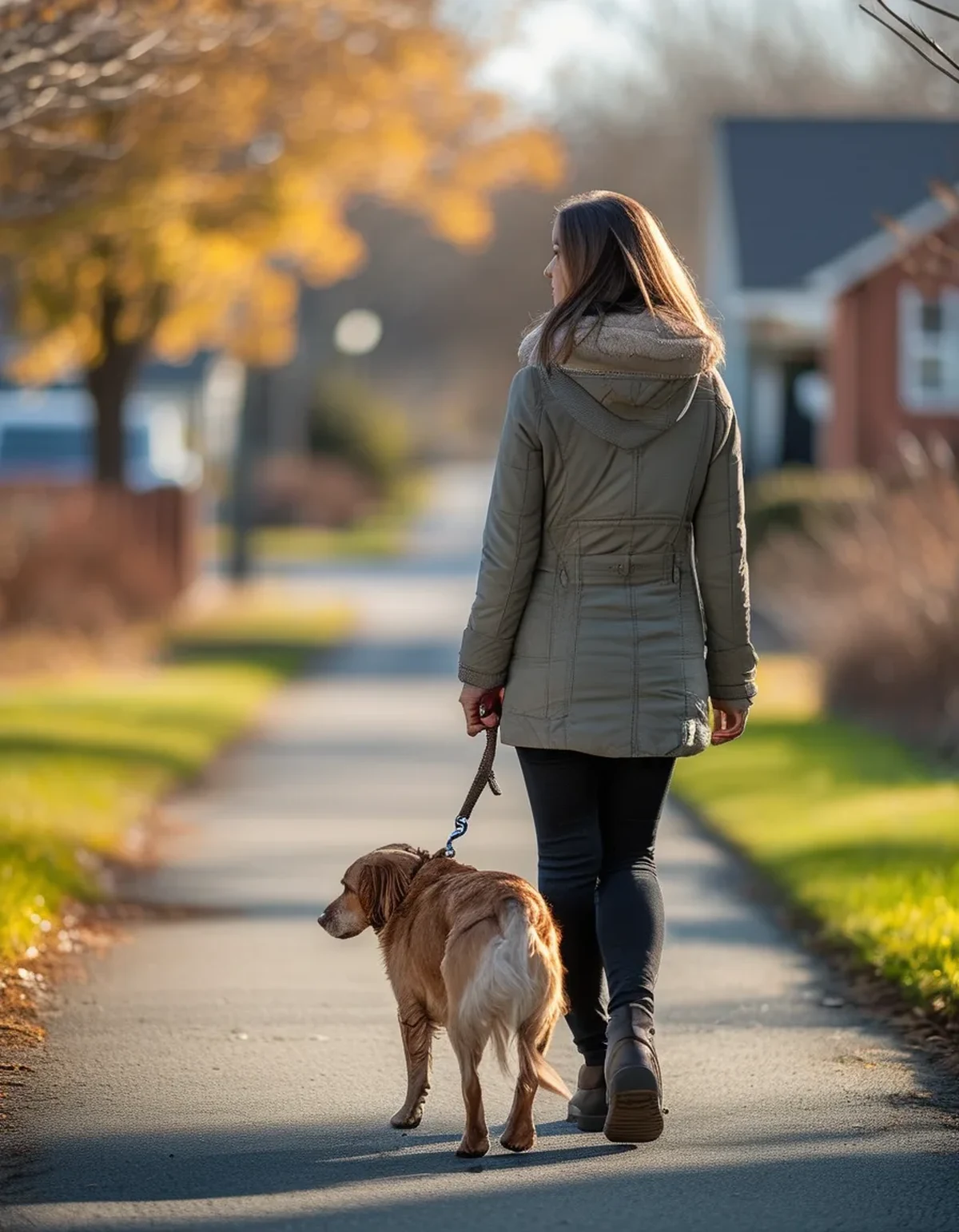
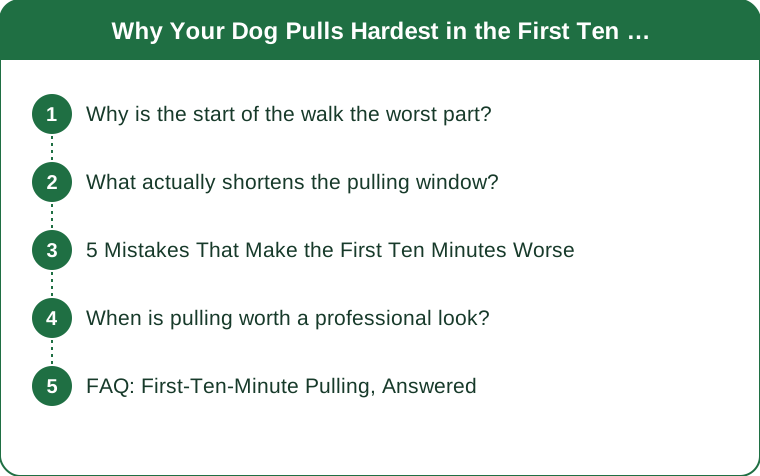
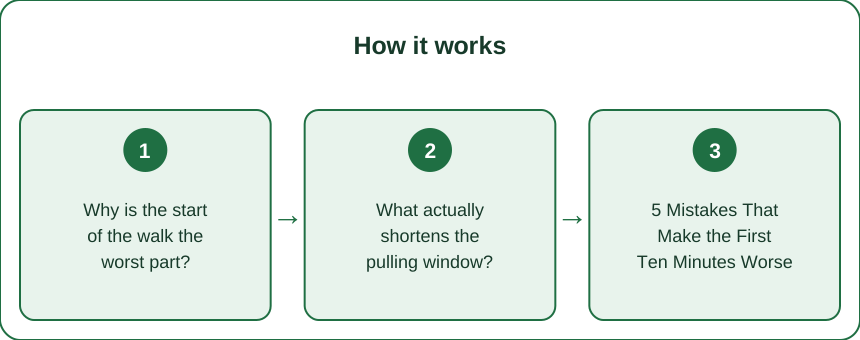
Why is the start of the walk the worst part?
Anticipation builds before you leave. The lead coming off the hook, shoes, the door - these are reliable predictors, and dogs learn predictors extremely well. Arousal is already elevated before a single step is taken.
Novel scent information is at its most intense. Everything that happened outside since the last walk is available at the start, and scent investigation is genuinely compelling for dogs in a way that is easy to underestimate.
No energy has been spent yet. Physical arousal and unspent energy both push toward speed, and your dog has an entirely different capacity for self-control ten minutes later.
Pulling has usually been reinforced accidentally. If pulling has ever resulted in moving forward faster - and it almost always has - it has been rewarded. Forward motion is the reward the dog wanted.
And your own pace at the start is often faster. People frequently begin a walk briskly to get going, which raises the dog’s arousal further rather than settling it.
The settling you notice later is arousal decaying. Nothing was trained in between. The dog simply became physiologically calmer, which is exactly why the fix belongs before and at the start rather than mid-walk.
What actually shortens the pulling window?
Make the pre-walk routine boring. Pick up the lead and sit down. Clip it on and wait. Repeat the predictors without the outcome until they stop generating excitement. This is slow, undramatic, and more effective than anything you can do outside.
Wait for calm at the door rather than at the pavement. Open the door, and close it again if your dog surges. Going through the door is the reward, and delivering it only when four feet are settled teaches something useful in about a week.
Start with two minutes of stationary sniffing. Let your dog investigate the first patch of grass thoroughly before going anywhere. Sniffing is calming for dogs and it satisfies the information-gathering drive that is doing much of the pulling.
Walk slower at the start, not faster. A slow first few minutes reduces arousal instead of feeding it. Increase pace once the lead is loose.
Change direction when the lead tightens, every time. Consistency matters more than method. If pulling never produces forward progress, it stops being reinforced - but this only works if it is every time, including when you are in a hurry.
And consider a front-clip harness for management. It reduces the mechanical advantage of pulling and makes the training period safer for your shoulder and the dog’s neck, without being a substitute for the training itself.
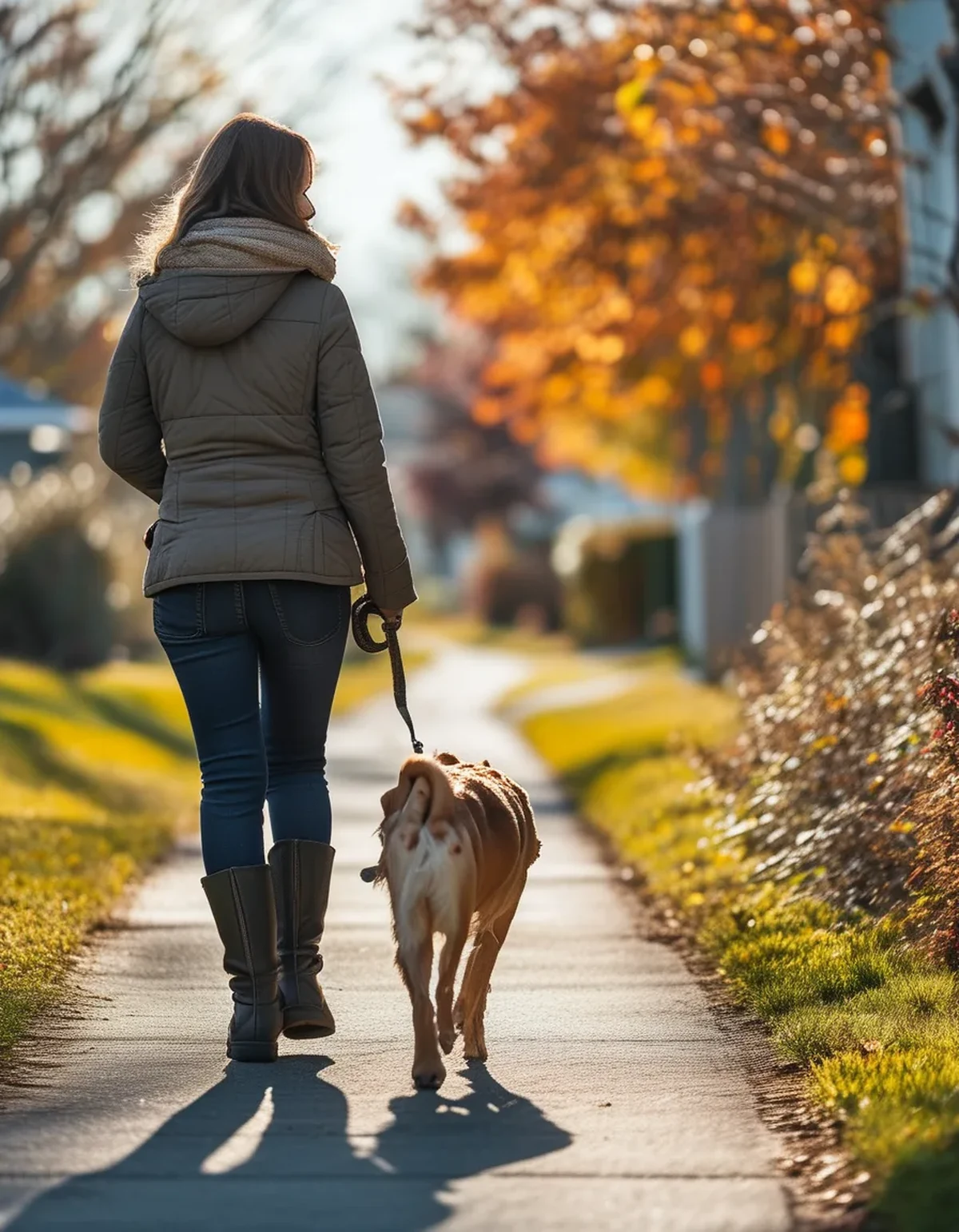
5 Mistakes That Make the First Ten Minutes Worse
Mistake 1: Getting the dog excited before you leave. Enthusiastic talk, fussing, and a lively countdown at the door all raise arousal at exactly the moment you want it lower.
Mistake 2: Letting pulling work when you are in a hurry. Every inconsistent day teaches that pulling sometimes works, and intermittent reinforcement is more durable than consistent reinforcement, which is why occasional exceptions are so costly.
Mistake 3: Trying to train loose-lead walking in the first five minutes. That is the window in which your dog has the least capacity to learn. Train in the calmer middle of the walk and manage the start.
Mistake 4: Not allowing sniffing. A walk that is entirely forward motion leaves the information drive unsatisfied, which raises frustration and pulling rather than reducing it.
Mistake 5: Blaming the dog for a route problem. If your first two hundred metres pass the most exciting things on the route - a park entrance, another dog’s garden, a busy road - the environment is doing this, not the dog’s temperament. Changing the first section of the route is often the fastest fix available.
The fifth is the one almost nobody checks. Walking the same first block every day builds a powerful anticipation pattern that is far easier to break by starting somewhere else.
When is pulling worth a professional look?
When it is sudden and new. A dog that has always walked calmly and now pulls persistently may be responding to pain, a change in vision or hearing, or something specific on the route.
When there is lunging, barking, or fixation. Reactivity toward dogs, people, or vehicles is a different problem from arousal-driven pulling and generally needs professional guidance rather than lead technique.
When the dog is injuring itself. Coughing, gagging, or straining hard against a collar risks damage. A properly fitted harness is the immediate management step, and it is worth discussing with a vet.
When you cannot physically manage it safely. Being pulled off balance is a genuine injury risk for you, and getting help early is far easier than after a fall.
When it does not settle at all during the walk. Consistent high arousal for the full walk suggests something other than the normal arousal curve and is worth investigating.
Speak to a vet or a qualified force-free trainer for individual guidance. This is general information about a common pattern, not advice for a specific dog.
FAQ: First-Ten-Minute Pulling, Answered
Why does my dog only pull at the start of the walk?
Arousal peaks around the pre-walk routine and the first minutes outside, novel scents are most concentrated then, and no energy has been spent. As arousal falls, pulling usually falls with it.
Should I tire my dog out before the walk?
A short calm activity can help, but vigorous play beforehand often raises arousal rather than lowering it. Making the pre-walk routine boring is generally more effective.
Does letting my dog sniff encourage pulling?
No - sniffing tends to be calming and satisfies the drive behind a lot of pulling. Pulling is reinforced by forward progress, not by permitted sniffing at a loose lead.
Do no-pull harnesses work?
A front-clip harness reduces the mechanical advantage of pulling and protects the dog’s neck, which makes the training period safer and easier. It manages the behaviour rather than teaching an alternative, so use it alongside training rather than instead of it.
TL;DR:
- The first ten minutes are the worst because arousal peaks around the pre-walk routine and no energy has been spent yet.
- Make the lead routine boring, wait for calm at the door, and start slowly rather than briskly.
- Two minutes of stationary sniffing at the start satisfies the drive doing much of the pulling and is genuinely calming.
- Change direction every single time the lead tightens - intermittent exceptions make pulling more durable, not less.
- Check the route: if your first block passes the most exciting things around, the environment is the cause and a different start is the fastest fix.
Your dog is not testing you at the door. They are at peak arousal, and arousal is a curve you can flatten.
Keep Reading
This article is for general informational and styling purposes only. Fit, sizing, and product availability may vary.