Dog Paw Care When the Sidewalks Get Cold and Wet
Quick Answer: The autumn paw problems are dryness and cracking from cool dry air, grit and debris trapped in the fur between the pads, and - once treatments start - de-icing salt, which is both an irritant and a poisoning risk when licked off. The routine that handles all three: wipe or rinse paws after every walk, keep the fur between the pads trimmed level with the pad surface, and apply a dog-safe paw balm a few times a week once the air turns dry.
Paw problems in autumn are easy to miss because dogs mask discomfort well. By the time there is visible limping, the crack is usually deep.

What actually happens to paw pads when the weather turns?
Paw pads are thick keratinized skin, and like all skin, they lose moisture to dry air. The autumn transition brings a fast drop in humidity, both outdoors and indoors once heating starts, and pads that were supple in humid August get noticeably drier within a couple of weeks.
Dry pads lose flexibility. A flexible pad deforms across an uneven surface; a dry, stiff one splits instead - typically as small fissures along the edges or in the deepest grooves. Those cracks then collect grit, which widens them.
Add the seasonal surface changes:
- Wet leaves and mud pack into the fur between the toes and hold moisture against the skin, which can lead to irritation and secondary infection.
- Road grit and small stones get pushed into the interdigital spaces.
- Cold pavement on longer walks causes discomfort well before it causes injury, and dogs will often shift weight or lift a paw rather than show obvious lameness.
- De-icing salt, once it appears, is chemically irritating to already-cracked pads and toxic if enough is ingested during grooming.
What to check weekly: run a thumb over each pad feeling for rough patches and splits, spread the toes and look between them, and check the fur between the pads for matting or packed debris. Two minutes per dog, once a week.
What does the after-walk routine actually need to be?
The minimum, every walk in wet or gritty conditions:
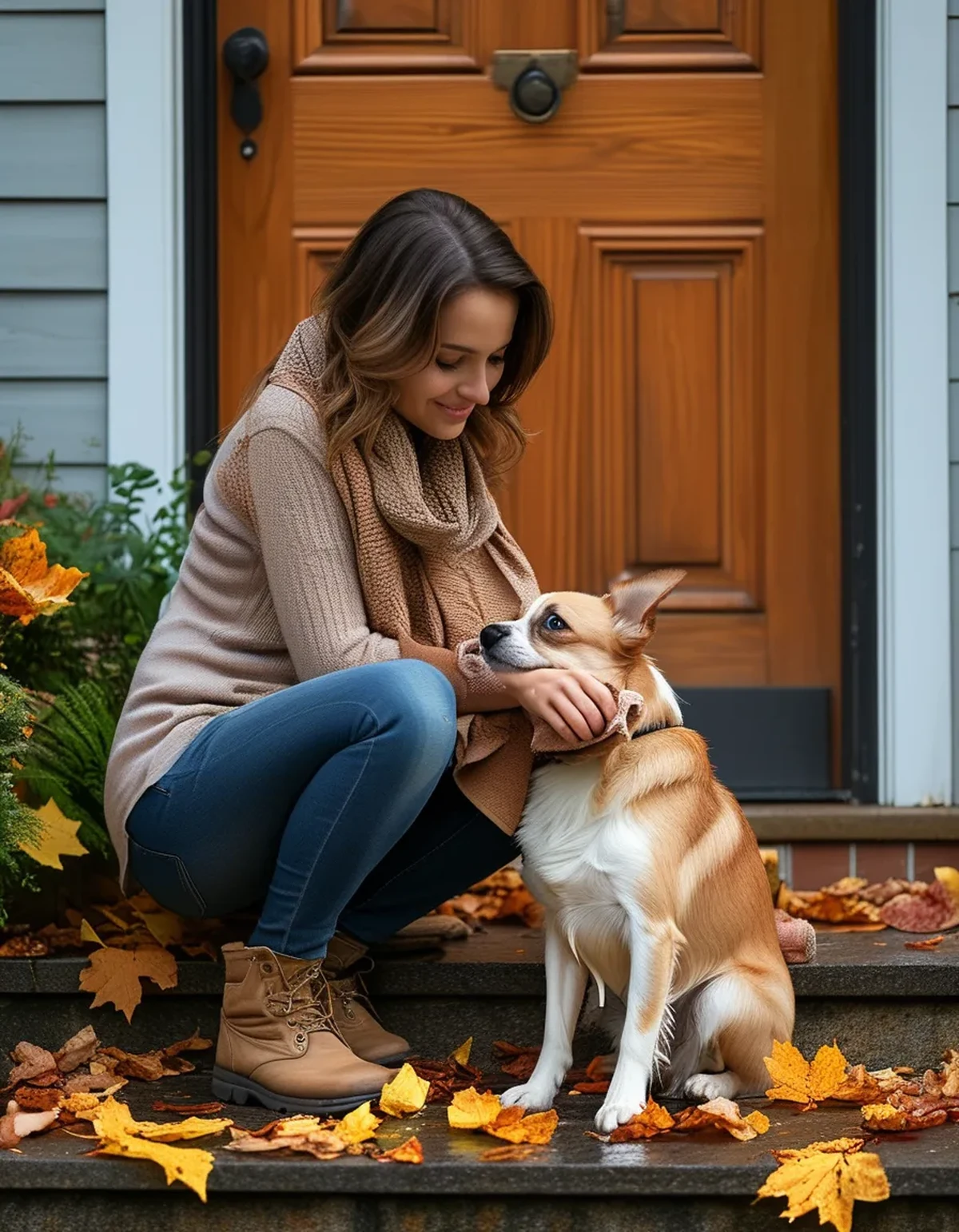
- Wipe all four paws with a damp cloth or a dog-safe wipe at the door. Get between the toes, not just the underside.
- Dry thoroughly. Moisture left between the toes is what causes irritation and yeast issues, and this is the step people skip. A dry towel, working between each toe.
- Check for debris, especially small stones lodged in the interdigital spaces and burrs in the fur.
When there is salt or chemical treatment on the ground:
- Rinse rather than wipe. Lukewarm water in a shallow bowl or a paw-washing cup removes dissolved salt in a way wiping does not.
- Do this before the dog has a chance to lick. Salt ingestion from paw grooming is a real toxicity route, and small dogs need less to reach a problematic dose.
Preventive grooming, every few weeks:
- Trim the fur between the pads level with the pad surface. Long fur there collects ice balls, mud, and grit, and it is the single highest-value grooming task for winter. Blunt-nosed scissors or a small clipper, and go carefully.
- Keep nails short. Long nails change how the paw loads and put more pressure on the pads themselves.
Paw balm: apply a dog-safe balm two or three times a week once the air turns dry, ideally at night when the dog is settled and less likely to lick it straight off. Look for beeswax-based formulas made for dogs - human hand creams are not appropriate and some contain ingredients dogs should not ingest.
What Nobody Tells You About Booties and Whether They Work
Booties are the most-recommended and least-used piece of dog gear, and there is a reason for the gap.
They genuinely work when they fit and the dog accepts them. Full protection from salt, grit, cold, and sharp debris. For dogs with existing pad injuries, or in areas with heavy chemical de-icing, they are the best available answer.
The two failure modes are fit and acclimation. Booties that are too loose come off within a block - most owners who say they do not work are describing a sizing problem. Measure the paw at its widest point with the dog standing and bearing weight, not lying down, and check each front and back paw separately since they often differ.
Acclimation takes longer than people give it. The standard approach: put one bootie on indoors for two minutes with treats, build to all four, then to short indoor sessions, then outdoors. Expect one to two weeks, not one afternoon. Dogs walk strangely at first because the sensory feedback from their pads is altered - this is normal and it resolves.
What actually goes wrong long-term: booties trap moisture. A dog in booties for an hour walk comes home with damp paws, and damp paws in warm indoor air is a setup for irritation. Take them off and dry the paws at the door, every time.
And the honest alternative: for dogs who genuinely will not tolerate them, a diligent rinse-and-dry routine plus balm covers most of the same risk in typical suburban conditions. Booties become close to non-negotiable in areas with heavy chemical treatment or extended sub-freezing walks.
When is a paw problem a vet problem?
Most autumn paw issues are manageable at home. These are not.
See a vet promptly for:
- Deep cracks that bleed or that expose raw tissue underneath.
- Limping that persists beyond a day, or that appears suddenly mid-walk.
- Swelling, heat, or discharge between the toes - this suggests infection or a foreign body such as a grass seed lodged under the skin.
- Persistent licking or chewing at one paw. Dogs lick what hurts, and focused attention on a single paw usually means something specific is wrong.
- A pad that has partially torn or degloved. These bleed dramatically and heal poorly without proper care.
- Any suspected salt or antifreeze ingestion. Antifreeze in particular is an emergency - it is sweet-tasting, highly toxic, and common in autumn and winter driveways.
Worth a call rather than a visit: mild dryness that is not improving with balm after two weeks, or recurring interdigital irritation, which sometimes has an underlying allergic cause rather than an environmental one.
A note on home treatment: do not use human antiseptics, hydrogen peroxide, or human medicated creams on paw pads without veterinary direction. Some are irritating and most will be licked off and swallowed.
This is general information, not veterinary advice - your vet knows your dog’s history and any specific risks.
FAQ: Autumn Dog Paw Questions, Answered
How cold is too cold for a walk?
It depends heavily on breed, coat, size, and age. As a rough guide, most healthy medium and large dogs are comfortable well below freezing for moderate durations, while small, thin-coated, elderly, or very young dogs need protection and shorter walks much sooner. Watch for paw lifting, reluctance to continue, and shivering.
Does paw balm actually do anything?
For dry, cracking pads, yes - a wax-based balm creates a barrier that slows moisture loss and adds some protection from salt. It will not fix a deep crack or replace a rinse routine, and it is a preventive rather than a treatment.
My dog hates having paws handled. What now?
This is worth training deliberately outside of walk time - short sessions of touching a paw and rewarding, building toward holding and then wiping. Ten seconds a day, and within a few weeks the after-walk routine stops being a wrestling match.
Are ice-melt products labeled pet-safe actually safe?
They are generally less irritating and less toxic than standard rock salt, which is a meaningful improvement. They are not harmless in quantity, and you have no control over what your neighbors use. Rinse regardless of what the bag on your own steps says.
TL;DR:
- Autumn brings dry cracking pads, packed grit and wet debris, and eventually de-icing salt.
- Wipe or rinse and dry thoroughly after every walk, especially between the toes.
- Trim the fur between the pads level with the pad surface - it is the highest-value grooming task of the season.
- Bleeding cracks, persistent limping, swelling, or focused licking on one paw means a vet, not a balm.
Two minutes at the door after each walk prevents nearly all of it, and your dog will be considerably more willing to go out in December because of it.
Keep Reading
This article is for general informational and styling purposes only. Fit, sizing, and product availability may vary.