5 Signs Your Dog Actually Needs a Rest Day From Exercise
Quick Answer: Reluctance to jump onto furniture or into the car, excessive panting well after activity ends, unusual stiffness getting up, and lower enthusiasm for a normally exciting walk are the clearest signs your dog needs a rest day, not just a shorter walk.
Most dog owners are good at spotting an injury, but overexertion often shows up as subtler behavior changes rather than obvious limping — and it’s easy to miss if you’re only watching for a dramatic sign.
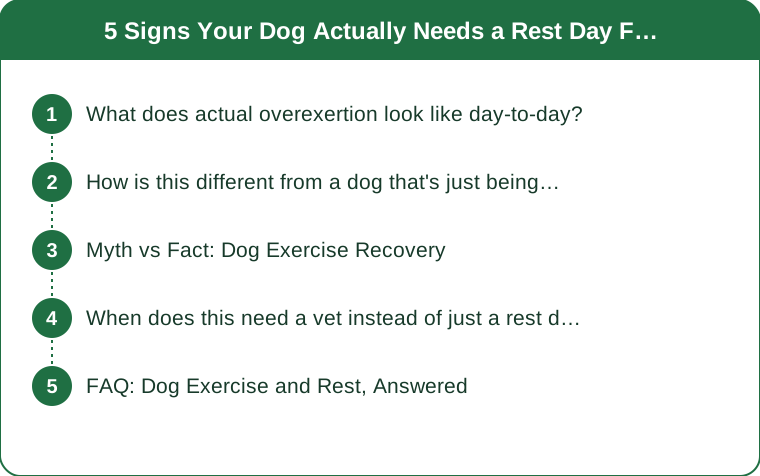
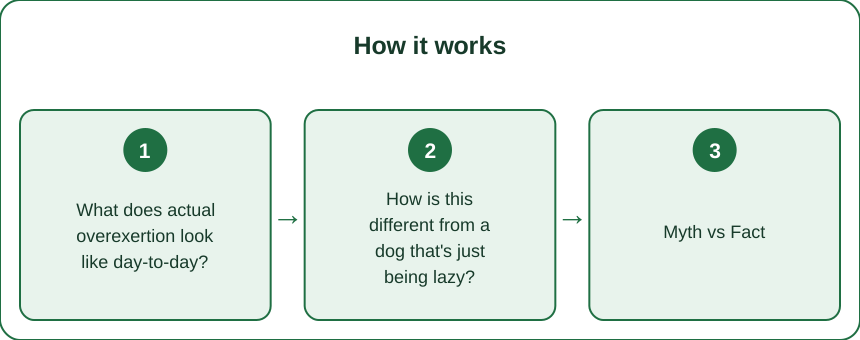
What does actual overexertion look like day-to-day?
Reluctance to do things they normally do without hesitation — jumping into the car, hopping onto the couch, taking stairs — is one of the earliest and most reliable signs, since it reflects real muscle fatigue rather than mood. Panting that continues well past the point activity normally stops (20-30+ minutes after you’re both home and settled) is another concrete signal worth tracking rather than dismissing.
How is this different from a dog that’s just being lazy?
A genuinely tired-but-fine dog will still perk up for something exciting — a favorite toy, the leash coming out, a doorbell. A dog that’s actually overexerted often shows flat enthusiasm even for things that usually get an immediate reaction, which is a more reliable tell than general low energy, since low energy alone can have a dozen unrelated causes.
Myth vs Fact: Dog Exercise Recovery
Myth: Dogs will just stop if they’re overdoing it. Fact: Many breeds, especially high-drive working and sporting breeds, will keep going past the point of healthy exertion because drive to keep moving overrides their own fatigue signals — it’s on the owner to watch for signs, not the dog to self-regulate.
Myth: A rest day means zero activity at all. Fact: A rest day usually means low-impact activity — a slow sniff walk instead of a run or fetch session — rather than complete confinement, which can actually cause its own restlessness.
Myth: Stiffness after exercise always means age or arthritis. Fact: Young, healthy dogs can show temporary post-exertion stiffness too, especially after a harder session than usual — it’s worth monitoring for whether it resolves within a day, not immediately assuming a chronic issue.
When does this need a vet instead of just a rest day?
Limping that doesn’t improve within 24-48 hours, or stiffness that gets worse rather than better with rest, is beyond a simple rest-day fix and worth a vet visit. Excessive panting paired with gum color changes, vomiting, or collapse is an emergency sign, not overexertion, and needs immediate care. This is general information, not veterinary advice — when in doubt, call your vet.
FAQ: Dog Exercise and Rest, Answered
How long should a dog’s rest day actually last?
Usually one full day of reduced-intensity activity (short leash walks instead of runs or fetch) is enough for typical overexertion — persistent signs beyond 2-3 days point toward a vet check instead.
Do puppies and senior dogs show overexertion differently?
Puppies often show it as sudden crashing sleep rather than reluctance, since their joints and drive to play can outpace their actual stamina; senior dogs more often show the classic stiffness-and-reluctance pattern.
Can overexertion happen even on a normal, unchanged routine?
Yes — heat, humidity, and surface (pavement versus grass) all add load even when distance and time stay the same, so a “normal” walk on a hot day can overexert a dog that handles the identical walk fine in cooler weather.
TL;DR:
- Reluctance to jump or climb stairs is an earlier, more reliable sign than obvious limping
- Prolonged panting well after activity ends is worth tracking, not dismissing
- Flat enthusiasm for normally exciting things beats general low energy as a fatigue signal
- Limping or worsening stiffness beyond 24-48 hours needs a vet, not just rest
Dogs push through fatigue more than they show it — reading the subtler signs is what actually prevents overuse issues before they become injuries.
Keep Reading
This article is for general informational and styling purposes only. Fit, sizing, and product availability may vary.