The Gray Muzzle Miles: Exercising Your Senior Dog With Love
Quick Answer: Senior dogs still need daily movement — it protects joints, weight, and cognition — but the format changes. Two or three 15-minute walks beat one long haul, the pace should be slow and sniff-led, and small accommodations (a minute of indoor warm-up, ramps, traction rugs) prevent most of the discomfort. Swimming is the single best senior-dog exercise. Any new change in mobility deserves a vet visit before you adjust the program yourself.
One day the dog who used to drag you up trails starts pausing at the door.
Not refusing. Just pausing — a beat of consideration that wasn’t there a year ago. And the walk quietly becomes a negotiation of love instead of a routine.
Here’s the thing worth knowing early: stopping the walks is the wrong response, and it’s the most common one. Movement is more important for an old dog than a young one, not less. What changes is the program.
(Your vet co-writes this plan. Any change in how your dog moves — new stiffness, a limp, reluctance that appeared suddenly — deserves their look before you adjust anything.)
How Much Exercise Does a Senior Dog Need?
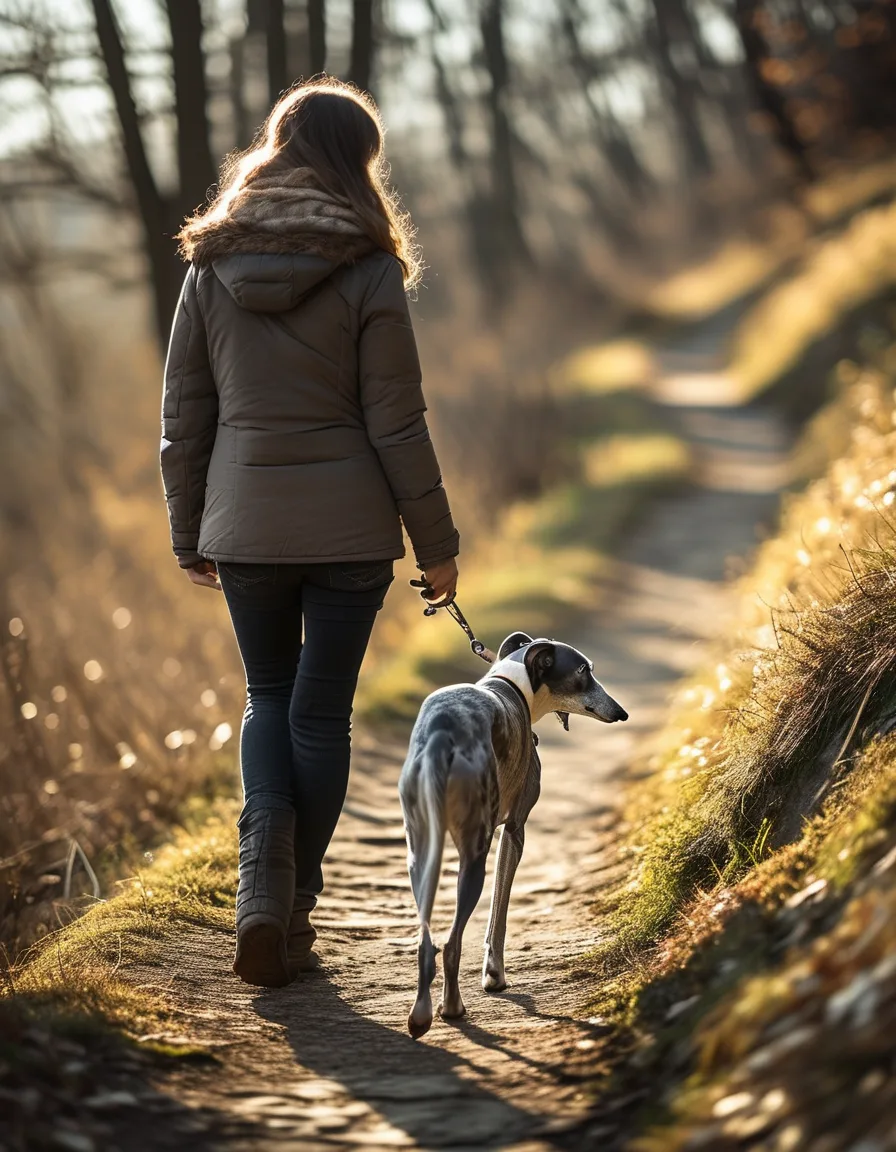
Roughly the same total, delivered differently. Two or three 15-minute walks beat one 45-minute haul, because senior joints handle movement much better in installments than in a single sustained load.
The reason is stiffness. An older dog warms up, gets going, and then — somewhere past the twenty-minute mark — starts to fatigue in a way that shows up as soreness the next morning rather than during the walk itself. Splitting the distance keeps every outing inside the comfortable window.
Signals that today’s edition is done:
- Lagging behind when they normally walk beside or ahead of you
- Heavy or changed panting that doesn’t match the temperature
- Sitting or lying down mid-walk
- A shortened, choppy stride or any new head-bob when walking
The dog sets the mileage now. You set the love. That’s not a consolation prize — it’s the actual job description at this stage, and it takes more attention than the old version did.
Why Does the Sniffy Pace Matter So Much?
Because for an old dog, the nose is doing more work than the legs, and mental stimulation matters as much as steps.
A slow, sniff-rich walk is enrichment gold. Scent processing is genuinely cognitively demanding — a dog reading a fence line is doing something closer to a crossword than a stroll — and cognitive engagement is one of the better tools available against age-related cognitive decline in dogs, which is more common than most owners realize.
So let them stop. Let the twelve-minute walk cover one block. The destination was always a human idea anyway, and it’s the part of the routine you can most cheaply let go of.
A practical version: designate some walks as “sniffaris” with no distance goal at all. Loose leash, your phone in your pocket, and you go wherever the nose goes for fifteen minutes.

What Small Accommodations Help an Older Dog Most?
Five, and they’re all cheap relative to how much they change a dog’s day.
- A minute of gentle indoor walking before cold-morning outings. Cold, stiff joints going straight into a walk is where a lot of senior soreness comes from. A lap of the hallway first is enough.
- Ramps or lifting for car and couch transitions. Jumping down is worse than jumping up — the impact loads the front end hard. A car ramp is the highest-value purchase on this list.
- Traction rugs on slippery floors. Hardwood and tile are genuinely hazardous for a dog with weakening hindquarters, and the splay-and-scramble is both painful and frightening. Runners along the main routes fix it.
- Nails kept short. Long nails change how a dog’s foot loads the ground and make slipping much more likely. It’s the most overlooked mobility intervention there is.
- A supportive bed they can get out of easily. Orthopedic foam, low sides, and not tucked into a corner they have to maneuver out of.
Small accommodations, large dignity.
Is Swimming Good for Senior Dogs?
It’s the best thing on the menu, if your dog likes water.
Swimming and shallow water-walking give full range of motion with essentially zero impact — the exact combination that arthritic joints want and that land exercise can’t provide. Many areas have canine hydrotherapy facilities with warm pools and underwater treadmills, often on veterinary referral. Regular dogs paddle at the lake perfectly well.
Two safety notes: use a canine life vest even for confident swimmers (old dogs tire fast and the vest also gives you a handle), and keep sessions short at first — five to ten minutes is a real workout for a senior dog.
And the kindest joint medicine on earth is weight management. Every extra pound is load through hips and knees on every single step. Studies in dogs have found that keeping body weight lean is associated with meaningfully later onset of arthritis-related problems and a longer functional life. Fewer pounds, easier miles — and it costs nothing but portion discipline.
What Nobody Tells You About Exercising an Old Dog
Slowing down is not always just age. Owners routinely attribute new reluctance to “getting old” when the actual cause is arthritis pain, hypothyroidism, or a heart issue — all of which are treatable. A dog on appropriate pain management often walks noticeably better within two weeks. That’s a vet visit, not a training adjustment.
Heat tolerance drops before anything else does. Older dogs regulate temperature less efficiently, so a walk that was fine at 75°F last summer may not be this year. Shift to early mornings and evenings sooner than you think you need to.
Muscle loss makes joint problems worse, not the other way around. Sarcopenia in senior dogs reduces the muscular support around arthritic joints, which increases pain, which reduces activity further. Gentle consistent movement is what breaks that loop.
They will overdo it if you let them. A senior dog having a good day will happily chase a ball until they can’t get up tomorrow. Enthusiasm in the moment is not a reliable guide to capacity — you’re the one who has to call time.
Cognitive decline shows up on walks first. Getting stuck in corners, staring at walls, seeming disoriented on familiar routes. It’s common, it’s often manageable, and it’s worth mentioning to your vet early rather than writing off as “just old.”
Mini FAQ
When is a dog considered a senior?
It’s size-dependent. Giant breeds hit senior status around 5–6 years, large breeds around 7, and small breeds often not until 10–11. The useful marker isn’t the birthday — it’s the first change in how they move, sleep, or recover from activity.
Should you stop walking a dog with arthritis?
No. Controlled, regular, low-impact exercise is part of standard arthritis management in dogs — inactivity accelerates muscle loss and stiffness, which makes the arthritis worse. What changes is intensity and surface, not whether. Your vet can advise on pain management that makes the walks comfortable.
How do you know if a walk was too long?
Watch the next 24 hours, not the walk itself. Increased stiffness the following morning, reluctance at the next walk, or more sleeping than usual all suggest yesterday was too much. Reduce by a third and rebuild from there.
TL;DR:
- Keep them moving — stopping the walks accelerates decline rather than protecting them.
- Two or three 15-minute walks beat one long one; senior joints prefer installments.
- Let the pace be slow and sniff-led — scent work is real cognitive exercise.
- Warm up indoors on cold mornings, add ramps and traction rugs, keep nails short.
- Swimming is the best senior exercise, and keeping them lean is the most effective joint medicine there is.
Installment walks, sniff-forward pace, warm-ups and ramps, water when possible, waistline watched. The gray muzzle earned a gentler program — same love, softer miles, and every one of them counts.
Keep Reading
This article is for general informational and styling purposes only. Fit, sizing, and product availability may vary.