Senior Dog Fitness: Keeping an Older Dog Moving Without Overdoing It
Quick Answer: Senior dogs need less intensity but not less movement - regular, shorter, more frequent activity preserves the muscle and joint health that keeps them mobile into old age. The working formula: two or three shorter walks daily instead of one long one, sniffing time counted as real enrichment rather than delay, low-impact additions like gentle hills, wading, and step-over games, and honest monitoring - next-day stiffness, lagging, or joint licking means yesterday was too much. In late summer, seniors also lose heat tolerance before anything else: early hours, shade routes, pavement checks.
Somewhere around the gray muzzle years, most owners quietly cut the walks - the dog seems slower, so the outings shrink, so the muscles shrink, so the dog gets slower still. It is the most loving mistake in dog ownership. Movement is not what wears an old dog out; it is what keeps an old dog from wearing out. The skill is dosing it - and the dose looks different at eleven than it did at three.
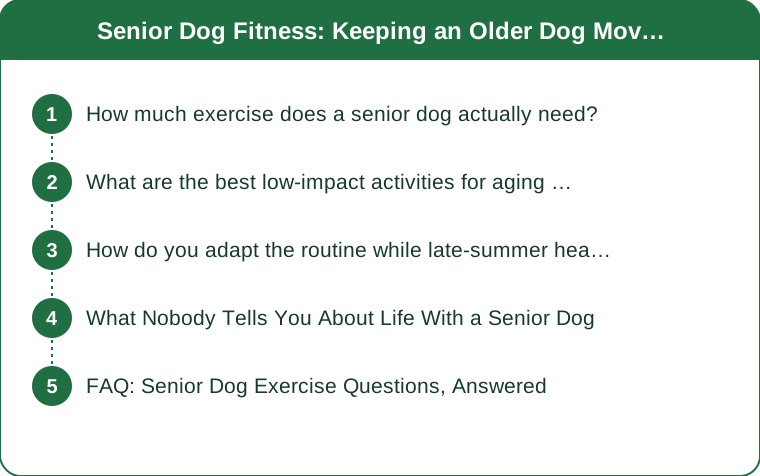
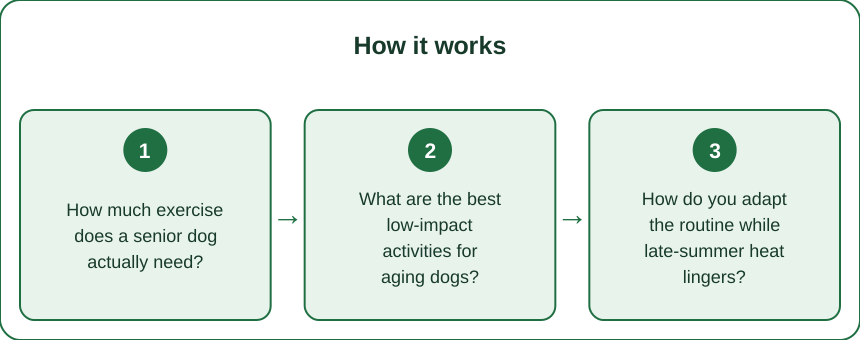
How much exercise does a senior dog actually need?
The honest answer: more than the couch, less than memory, delivered differently than before.
Senior arrives at different ages by size. Giant breeds run on an accelerated calendar and reach senior status around six or seven; large breeds around seven or eight; medium dogs eight to ten; small dogs often not until ten or eleven. The dog’s body, not the birthday, makes the call - and the vet’s assessment of joints, heart, and weight is the real starting line for any senior routine. Worth saying once, clearly: this is general guidance - your vet, who knows this particular dog, outranks every article on the internet including this one.
The structural change: frequency up, duration and intensity down. The aging body handles repeated modest efforts far better than occasional big ones - a pattern dog joints share with human ones. Two or three 15-to-25-minute walks spread through the day beat a single 50-minute expedition: same total movement, less cumulative strain, and the between-walk recovery that older tissue needs. The weekend-warrior pattern - sedentary week, big Saturday hike - is the single most injury-productive schedule for a senior dog.
Read the dog, not the clock. The reliable signals of the right dose: finishing the walk with energy left, normal movement the next morning, and enthusiasm at the leash. The signals of too much arrive on a delay - next-day stiffness, especially rising from bed; lagging behind mid-walk; sitting down on route; licking a joint that evening. Any of those means yesterday exceeded the budget, and the correction is shaving distance or intensity, not canceling movement.
And weight is the silent multiplier. Every extra pound rides directly on aging joints - weight management is the least glamorous and most effective mobility intervention available for senior dogs, worth more than any supplement on the shelf. Keeping a senior lean adds comfortable months to every year.
What are the best low-impact activities for aging dogs?
The senior menu trades explosive fetch for sustained, controlled, joint-kind movement - and most dogs take to it like they had been waiting.
The sniff walk is the crown jewel. A slow walk where the dog’s nose sets the agenda is genuine enrichment - scent work is cognitively demanding, and mental exercise tires a dog as honestly as physical work while asking nothing of the joints. Reframe the stop-and-sniff from delay to purpose: one daily walk where the route is theirs, sniffing unbudgeted, is the best senior-brain workout there is.
Gentle gradients build strength walking cannot. A mild grassy slope, walked up slowly a few times, loads the rear-end muscles that atrophy first in old dogs - the same muscles that power standing up from the floor. Grass beats pavement for footing and forgiveness; steep hills and stairs marathons stay off the menu.
Water work, with senior-specific rules. Wading and shallow swimming are the classic zero-impact strengtheners, and late summer is their season - with caveats that matter more now: warm calm water only, easy entry and exit (steep banks defeat old shoulders), sessions of minutes not hours, and a dry-off after, because damp chill settles into arthritic joints. A dog who never swam young should start with wading, not laps.
Home floor games do quiet physio work. Step-overs - a broomstick on two books, walked over slowly in both directions - build deliberate leg placement and range of motion. Cookie stretches - luring the nose toward each hip with a treat - keep the spine mobile. Slow figure-eights around two chairs work balance. Three minutes of this on non-walk days is a genuine mobility program in disguise.
And keep something that feels like play. A senior dog still needs joy on the schedule: short soft-toy games, hide-and-seek with treats, rolling fetch along the ground instead of thrown. The tail is part of the fitness plan.
How do you adapt the routine while late-summer heat lingers?
Heat is the seasonal complication, and seniors lose their margin for it before anything else ages.
Old dogs cool worse. Aging cardiovascular systems, reduced fitness, extra weight, and common senior conditions - laryngeal issues, heart disease - all sap the panting system’s capacity, and flat-faced breeds start with less. A summer routine the same dog handled at five can be genuinely risky at eleven. August asks for a schedule change, not toughness.
Own the bookends of the day. Early morning is the gold slot - pavement cool, air cool, the day’s best sniffing still fresh on the ground. Evening works with a check: the pavement test - the back of your hand flat on the asphalt for seven seconds; if it is uncomfortable for you, it is unacceptable for pads. Sidewalks hold afternoon heat well past sunset in August, and senior pads are thinner than they used to be.
Shade-route the map, and carry water. The summer loop follows tree cover and grass margins rather than open sidewalk; a collapsible bowl and water join every outing over twenty minutes. Grass verges are cooler, softer, and more interesting to the nose - three wins per step.
Know the warning signs cold. Heavy relentless panting, a tongue flattened wide, thick drool, wobbling, or seeking ground contact mean stop, shade, water on the belly and paws, and a vet call if recovery is not prompt - senior dogs escalate faster and deserve a lower alarm threshold. On genuinely hot days, the honest answer is moving the whole session indoors: floor games, stuffed food puzzles, training refreshers, and hallway scent hunts keep the day’s movement quota alive in the air conditioning.
Two gear notes that earn their place now: a well-fitted harness moves leash pressure off an arthritic neck and helps you offer gentle assists on steps; and at home, rug runners across slippery hard floors are the cheapest mobility aid in existence - old hips lose more to hesitation on slick footing than most owners ever notice.
What Nobody Tells You About Life With a Senior Dog
The slow walk turns out to be the good part. For years the walk was exercise, on a schedule, at a pace. The senior sniff-stroll - unhurried, nose-led, ten minutes to do one block - has a way of becoming the most restorative slot in the owner’s day too. The dog was never in a hurry; it just took them a decade to talk you out of it.
Dogs are professional pain-hiders. Evolution taught them not to advertise weakness, so limps appear long after discomfort did. The tells are subtler: hesitating at the car door, taking stairs one-at-a-time, choosing the rug over the tile, licking a wrist in the evening. Noticing early - and telling the vet, because modern pain management for arthritic dogs is genuinely good now - changes the whole final act.
Muscle is losable and rebuildable, even now. Senior dogs lose rear-end muscle fast during any layoff - two weeks of rest after a bad patch visibly shrinks the hindquarters - but they also rebuild with consistent gentle work. The hill walks and step-overs are not busywork; they are the difference between a dog who can rise from the floor at thirteen and one who cannot.
Your own step count is quietly tied to theirs. When the dog’s miles drop, the owner’s tend to follow - the classic senior-dog-owner pattern is both parties softening together. The fix that respects everyone: the dog gets the short sniff outings, and you take your own brisk solo walk after - the leash schedule keeps anchoring your habit even as the shared miles shorten.
The routine is the love language. Senior dogs run on predictability - same walk times, same routes with familiar smells, same evening ritual. What looks like a boring schedule from outside is, from inside the dog, the deep comfort of a world that still works exactly as expected.
FAQ: Senior Dog Exercise Questions, Answered
How far should a ten-year-old dog walk?
There is no universal number - a fit ten-year-old border collie and an arthritic ten-year-old lab live in different worlds. The working method: start from what the dog currently finishes with energy to spare, split it into two or three daily outings, and adjust by the next-day report - stiffness means shorter, easy brightness means room to grow. Your vet sets the ceiling for dogs with diagnosed conditions.
Is it okay to skip walks on bad days?
Skip the walk, not the movement. On flare days, heat days, or low days, swap in indoor floor games, a few cookie stretches, and a scent hunt down the hallway - joints with arthritis generally feel better with gentle motion than with full rest, and a zero day tends to produce a stiffer tomorrow. A string of bad days, though, is a vet visit, not a scheduling problem.
Do joint supplements actually help senior dogs?
The evidence is mixed - some dogs on omega-3s and joint blends show visible comfort improvements, others none, and quality varies wildly across products. They are reasonable to try with your vet’s input and honest before-and-after observation. What outperforms every supplement, in study after study: keeping the dog lean and keeping the dog moving.
When is slowing down a vet problem instead of normal aging?
When it changes fast - weeks, not months - or comes with a limp, a behavior shift, panting at rest, appetite change, or reluctance toward things the dog loved last month. Gradual easing is aging; abrupt easing is usually something specific, and specific things in senior dogs are often treatable. The rule that serves everyone: when in doubt, let the vet make the call.
TL;DR:
- Seniors need movement redistributed, not removed: two or three short walks beat one long one, every time.
- The sniff walk is real exercise - cognitive work that costs the joints nothing.
- Build the menu on gentle hills, wading, step-over games, and cookie stretches; retire the leaping and the weekend-warrior Saturdays.
- August rules: early hours, shade routes, the seven-second pavement test, and a lower alarm threshold for heat signs.
- Watch the delayed signals - next-day stiffness, lagging, joint licking - and let the vet see anything that changes quickly.
An old dog does not need you to bring back the five-mile years. They need the ten-minute loop, three times a day, at the pace of the smells - and that modest arithmetic is what keeps them rising easily from the floor for years you have not met yet.
Keep Reading
This article is for general informational and styling purposes only. Fit, sizing, and product availability may vary.