Why the Same Hike That's Perfect for Your Dog at Two Is Too Much at Eight
A hiking or running routine that a dog handled easily at two years old can become genuinely too much by eight, even without any obvious injury or diagnosed condition — exercise needs shift substantially across a dog’s life stages in ways that are easy to miss if the same routine has simply continued by habit. Here is why needs shift so much, the signs a routine no longer matches your dog’s current age, and how to adjust appropriately.
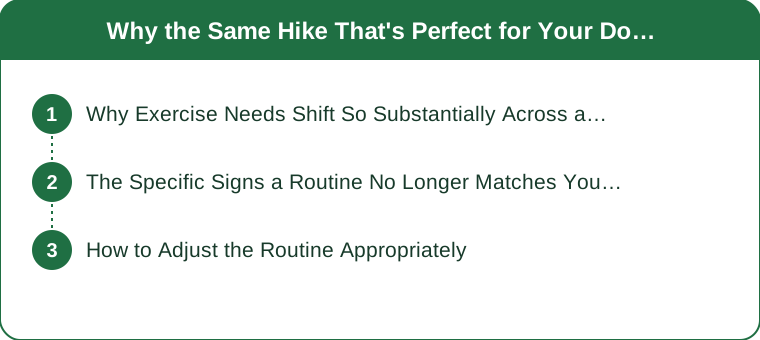
Why Exercise Needs Shift So Substantially Across a Dog’s Life Stages
The physiological reasons: the the-joint-cartilage-and-connective-tissue-gradually-lose-resilience-with-age (the cumulative wear on joints and connective tissue over years of activity meaning the same impact level that was fine at two carries genuinely more cumulative risk by eight, similar in principle to the impact-exercise-bone-density-guide logic applied to dogs — the cumulative-joint-wear-changes-what-impact-level-is-actually-appropriate-over-time), the the-cardiovascular-and-thermoregulatory-capacity-changes-gradually-with-age (the heart and temperature-regulation efficiency shifting gradually over a dog’s life, meaning the same duration or intensity of exertion places a genuinely different physiological demand on an older dog — the cardiovascular-capacity-changes-gradually-and-often-invisibly-with-age), the the-recovery-time-between-exercise-sessions-generally-lengthens-with-age (the time needed to fully recover from a given level of exertion typically increasing gradually, meaning a routine with back-to-back demanding days that worked fine at two may not allow adequate recovery at eight — the recovery-time-needed-between-sessions-generally-increases-gradually-with-age), the the-breed-and-individual-variation-means-the-exact-timeline-differs-significantly-dog-to-dog (the pace and degree of this shift varying considerably by breed size and individual dog, per the matching-exercise-to-your-dogs-actual-breed-guide logic, meaning there’s no single universal age cutoff that applies to every dog — the the-exact-timeline-is-highly-individual-not-a-single-universal-age-cutoff), and the reframe (the shifting needs as a real, gradual physiological process rather than a sudden cliff at a specific age — meaning a routine needs periodic reassessment rather than a single one-time adjustment at some arbitrary ‘senior’ birthday).
The Specific Signs a Routine No Longer Matches Your Dog’s Current Age
What to watch for: the the-noticeably-longer-recovery-after-a-previously-normal-level-of-exercise (the dog seeming more fatigued or stiff the day after a hike or run that used to produce no noticeable aftereffect at all — the longer-recovery-time-after-a-previously-easy-activity-level-is-a-clear-signal), the the-reluctance-or-hesitation-at-the-start-of-an-activity-that-used-to-generate-immediate-enthusiasm (the a previously eager, immediately excited response to leash or hiking gear becoming noticeably more hesitant, a behavioral signal worth taking seriously — the a-behavioral-shift-in-enthusiasm-is-a-meaningful-early-signal-worth-noticing), the the-visible-stiffness-or-slower-gait-especially-noticeable-after-rest-periods (the stiffness particularly evident after resting following exercise, a common early sign of joint strain accumulating faster than it used to, per the senior-dog-gentle-exercise-guide logic — the post-rest-stiffness-specifically-is-a-well-recognized-early-sign-worth-monitoring), the the-changes-in-typical-pace-or-needing-more-frequent-breaks-during-the-same-route (the same familiar route now requiring a slower pace or more frequent stops than it used to, a direct behavioral indicator that current capacity has shifted from before — the needing-more-breaks-on-a-familiar-route-directly-indicates-a-capacity-shift), and the frame (the signs as longer recovery time, hesitation at activity start, visible post-rest stiffness, and needing more breaks on a familiar route — behavioral and physical signals worth tracking over time rather than waiting for an obvious injury to prompt a routine change).
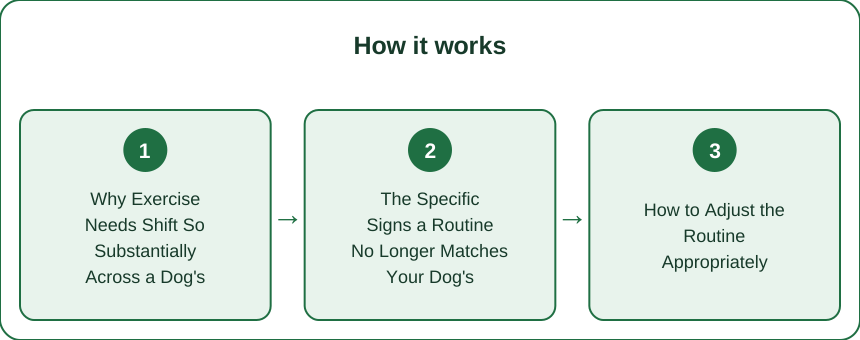
How to Adjust the Routine Appropriately
The practical adjustments: the shift-toward-lower-impact-activity-types-rather-than-simply-reducing-duration-alone (the swapping some higher-impact activity for lower-impact options — swimming, gentler terrain — rather than only shortening the same high-impact routine, per the running-with-your-dog-guide logic applied across the life stage — the changing-activity-type-not-just-duration-addresses-the-actual-joint-impact-concern-more-directly), the the-build-in-more-recovery-time-between-more-demanding-sessions (the spacing out higher-intensity days with more rest between them than was needed at a younger age, matching the genuinely longer recovery time now required — the more-spacing-between-demanding-sessions-matches-the-longer-recovery-time-now-needed), the the-watch-weather-and-temperature-tolerance-more-closely-than-before (the thermoregulatory changes meaning closer attention to heat and cold tolerance than was needed at a younger age, adjusting timing and duration accordingly — the closer-weather-tolerance-monitoring-matches-the-changed-thermoregulatory-capacity), the the-keep-the-dog-mentally-engaged-even-as-physical-intensity-decreases (the maintaining mental stimulation and enrichment even as physical exercise intensity is scaled back, since the two needs don’t decline at the same rate — the mental-engagement-doesnt-need-to-decline-at-the-same-rate-as-physical-intensity), the the-check-in-with-a-veterinarian-about-the-appropriate-adjustment-for-your-specific-dog (the individual variation being significant enough that a veterinarian familiar with your specific dog’s breed, weight and health history can give more precise guidance than general age-based rules — the a-veterinarian-can-give-guidance-specific-to-your-individual-dog-rather-than-a-generic-age-based-rule), and the frame (the adjustment as shifting toward lower-impact activity types, adding more recovery time between demanding sessions, watching weather tolerance more closely, maintaining mental engagement even as physical intensity decreases, and checking in with a veterinarian for guidance specific to your dog — a gradual, ongoing recalibration rather than a single fixed change at some arbitrary age).
A dog’s exercise needs shift substantially across life stages because joint cartilage and connective tissue gradually lose resilience with cumulative wear, cardiovascular and thermoregulatory capacity change gradually over the years, and recovery time between exercise sessions generally lengthens with age — a real, gradual physiological process rather than a sudden cliff at any specific birthday, and one that varies considerably by breed and individual dog. The signs a routine no longer matches a dog’s current age include noticeably longer recovery after a previously easy activity level, hesitation at the start of an activity that used to generate immediate enthusiasm, visible stiffness especially after rest periods, and needing more frequent breaks on a familiar route than before. Adjusting appropriately means shifting toward lower-impact activity types rather than just shortening the same high-impact routine, building in more recovery time between demanding sessions, watching weather and temperature tolerance more closely than before, maintaining mental engagement even as physical intensity scales back, and checking in with a veterinarian for guidance specific to that individual dog rather than relying on a generic age-based rule.
Keep Reading
This article is for general informational and styling purposes only. Fit, sizing, and product availability may vary.