The Dog Walk, Upgraded: Turning Twice-Daily Duty Into Real Training
The dog walk happens twice daily regardless of motivation — which makes it the most reliable training slot in your week, currently spent at sniff-pace. The upgrade guide: the interval conversion, the park-bench strength stops and the rules that keep the dog’s walk still the dog’s.
The Reliability Advantage
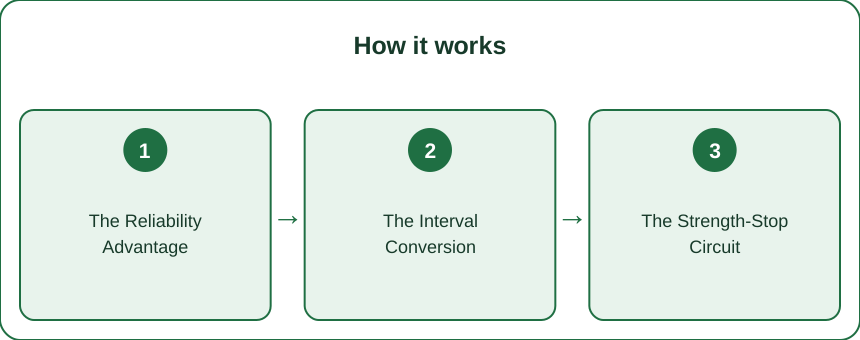
Why the dog walk beats the gym plan: it already happens (the twice-daily, weather-resistant, guilt-enforced slot — the adherence problem every fitness plan fights is pre-solved by a creature who won’t accept excuses), the volume math (2×20 minutes daily = 4.5+ weekly hours of potential training time — currently logged at stroll pace; upgrading HALF of it transforms the week’s activity), and the double-dividend frame (the upgraded walk serves both parties — the dog getting a faster, more engaging walk is a better-exercised dog; the tired dog and the trained owner exit the same loop).
The Interval Conversion
Pace-play with a leash: the sniff-and-sprint structure (the dog walk naturally alternates anyway — formalize it: brisk 2-3 minute pushes between sniff stops; the Japanese-walking protocol with built-in recovery periods the dog schedules), the leash-manners prerequisite (intervals need loose-leash walking — the pulling dog makes pace changes chaos; the heel-work IS the first training block, for both of you), the terrain tools (the hill on your route is the intensity dial — brisk up, recover down; the dog approves of hills unconditionally), and the split strategy (one walk stays the dog’s sniffari — enrichment matters; the other becomes the training walk — the both-needs-met daily schedule).
The Strength-Stop Circuit
The park-bench additions: the sit-stay circuit (the dog’s sit-stay practice doubles as your set window — 10 squats, 10 incline push-ups on the bench, 10 step-ups while the dog holds; obedience training and strength training in one stop), the walking lunges segment (ten lunges on a quiet path stretch — the dog walks beside, mildly confused, fully supportive), the tree-and-post anchor work (the leash looped safely for a 30-second wall-sit or calf-raise set — short stations, never out of reach), and the play-burst finisher (the fetch sprints and tug sessions that spike YOUR heart rate too — the play that counts as intervals for whoever’s running).
The Dog-First Rules
Keeping it fair: the heat law (dogs overheat faster than owners — the pavement hand-test, the water stops and the summer schedule shifting to mornings; the training walk yields to the dog’s thermometer, always), the age-and-breed honesty (the senior dog and the flat-faced breeds set their own pace — the upgrade fits the dog you have; the strength stops work at any dog speed), the sniff-rights preservation (sniffing is the dog’s newspaper — the all-brisk walk deprives them; the split schedule or the intervals-with-sniff-recoveries structure protects it), and the joint payoff (the research on dog owners’ activity levels is already favorable — the upgrade just collects the interest; the dog was your accountability partner all along, now they’re your trainer). Twice a day, already scheduled: the training slot was wearing a leash.
Formalize the sniff-and-sprint, bench stops with sit-stays, one walk stays theirs, heat rules everything. The dog walk is your most reliable training slot — upgrade half of it and keep the sniffari sacred.
Keep Reading
This article is for general informational and styling purposes only. Fit, sizing, and product availability may vary.