Does Your Dog Actually Need a Recovery Day From Exercise?
Quick Answer: Signs a dog needs a lighter recovery day include reluctance to start normally-loved activities, stiffness or favoring a limb after waking, unusually low energy the day after intense exercise, and slower-than-usual recovery of normal enthusiasm — a day of gentle walks and mental enrichment instead of high-intensity activity usually addresses this within a day or two.
Most dog exercise advice focuses on making sure dogs get enough activity, but for genuinely high-drive or working-breed dogs, recognizing when they need less is just as important.

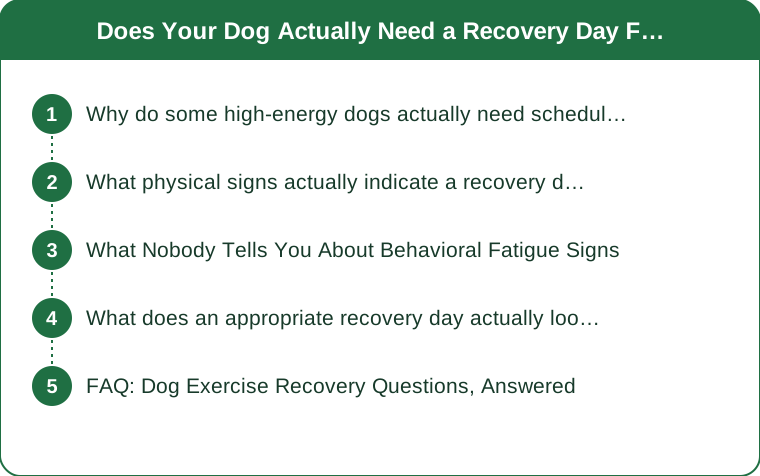
Why do some high-energy dogs actually need scheduled recovery?
Dogs bred for high drive (herding breeds, working breeds) often don’t self-limit the way a more moderate-energy dog might — they’ll keep going even when fatigued or building toward overuse issues, which means the owner needs to actively watch for physical and behavioral signs rather than relying on the dog to slow down on its own.
What physical signs actually indicate a recovery day is needed?
Stiffness after resting (especially noticeable when first standing up), reluctance to jump onto furniture or into a car that’s normally routine, and a slightly altered gait are all physical signals worth taking seriously, particularly following a notably harder or longer session than usual.

What Nobody Tells You About Behavioral Fatigue Signs
Beyond physical signs, unusually low enthusiasm for a normally exciting cue (like grabbing the leash) or uncharacteristic irritability can indicate mental or physical fatigue building up, even without obvious physical symptoms — behavior changes sometimes show up before physical ones do.
What does an appropriate recovery day actually look like?
A recovery day typically swaps high-intensity activity (running, intense fetch, agility) for gentle leash walks and low-impact mental enrichment (puzzle feeders, scent work), maintaining activity and engagement without the physical load that’s driving the need for recovery in the first place.
FAQ: Dog Exercise Recovery Questions, Answered
How often do active dogs need a recovery day?
This varies significantly by breed, age, and individual dog, but many working or high-drive breeds benefit from at least one lighter day weekly, more if training intensity has recently increased.
Is limping after exercise always something to worry about?
Occasional mild stiffness that resolves within a day is common, but persistent limping, especially if it doesn’t improve with rest, warrants a veterinary check rather than just more recovery days.
Do puppies and senior dogs need recovery differently than adult dogs?
Yes — puppies’ growing joints and senior dogs’ joint wear both generally call for more conservative exercise loads and more frequent lighter days than a healthy adult dog in its prime. This is general information, not veterinary advice.
TL;DR:
- High-drive dogs often don’t self-limit, making owner awareness of fatigue signs important
- Stiffness after rest and reluctance toward normally-loved activities are key physical signs
- Behavioral changes (low enthusiasm, irritability) can appear before physical symptoms
- A recovery day swaps intensity for gentle walks and mental enrichment, not full rest
This is general information, not veterinary advice — persistent limping or lameness deserves a vet visit rather than continued rest days alone.
Keep Reading
This article is for general informational and styling purposes only. Fit, sizing, and product availability may vary.